
5 Forgotten Movie Trilogies That Are Perfect From Start to Finish
I honestly miss the time when trilogies were simple and wholesome instead of constantly chasing bigger action scenes in every single movie. A lot of modern franchises already start thinking about spin-offs, crossovers, and cinematic universes before the first film even has its own identity. And that's what ruins the foundation. Older trilogies had a more personal feeling; it felt like we were growing old with those characters after every installment, and they didn't exactly care about being greenlit for the next season or next spin-off.
I especially love the five trilogies on this list because they are all different from each other. And none of them became giant mainstream obsessions, which, according to me, is the best part. Let's dig in.
5
‘The Three Colors Trilogy’ (1993–1994)
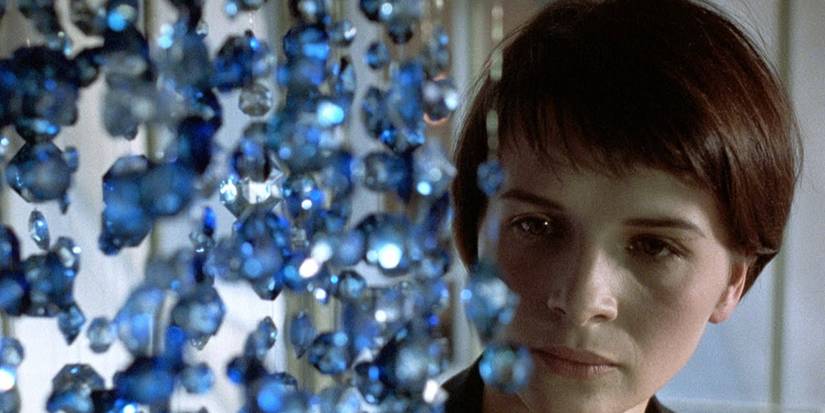
Krzysztof Kieślowski’s Three Colors films are all built around different ideas, liberty, equality, and fraternity. Blue follows Julie (Juliette Binoche) after the sudden death of her husband and daughter leaves her trying to detach herself from almost every part of her old life. White shifts toward Karol (Zbigniew Zamachowski), a man humiliated after his marriage collapses, while Red centers on Valentine (Irène Jacob) and her strange connection with a retired judge who spends his time secretly listening to other people’s phone calls.
The reason the trilogy works so beautifully together is that every film approaches loneliness differently. Julie tries to erase emotional attachment completely, Karol becomes obsessed with revenge and dignity, and Valentine slowly develops a connection with somebody she barely understands. Small details quietly connect all three stories, though each film still feels emotionally complete on its own. By the final moments of Red, the trilogy somehow pulls everything together without making the connection feel forced or overly dramatic.
4
‘The Apu Trilogy’ (1955–1959)
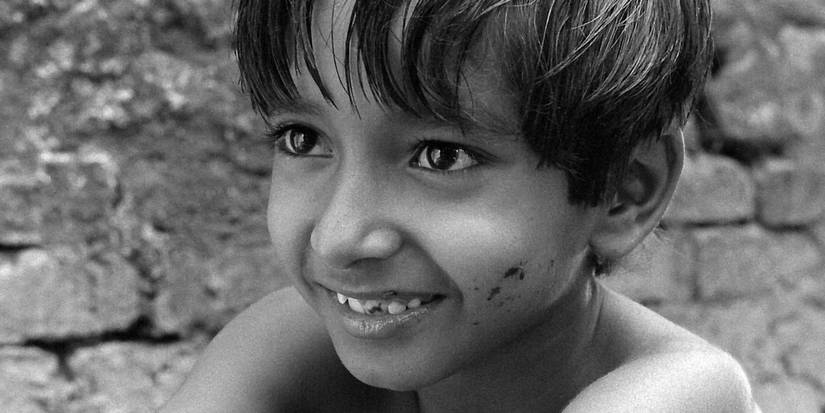
Satyajit Ray’s Apu trilogy follows Apu from childhood into adulthood, though the films never feel rushed while moving through different stages of his life. Pather Panchali begins in a poor rural village where Apu spends much of his childhood observing the world around him alongside his sister Durga. Simple moments become deeply memorable because Ray pays close attention to how these people actually live day to day. A train passing through the distance or children running through fields somehow becomes just as emotionally important as larger dramatic scenes.
The later films gradually push Apu into completely different environments. Aparajito follows him leaving home for education, while Apur Sansar shows him entering adulthood, marriage, fatherhood, and devastating loss. One thing that makes the trilogy extraordinary is how naturally Apu changes across the years. He is not written like a symbolic character carrying a grand message. He simply feels like a real person growing older, making mistakes, drifting away from people, and trying to understand what kind of life he actually wants.
3
‘The Before Trilogy’ (1995–2013)
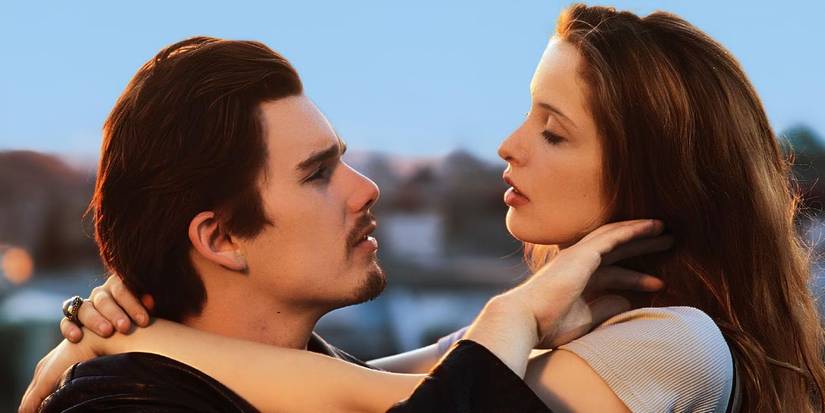
The entire Before trilogy is built mostly around conversation, which honestly should not work as well as it does. Before Sunrise starts when Jesse (Ethan Hawke) and Céline (Julie Delpy) meet on a train and impulsively spend one night walking around Vienna together before Jesse has to leave for America the next morning. Very little “happens” in the traditional sense. They talk about relationships, family, religion, death, ambition, and the small fears they would probably never admit to strangers under normal circumstances.
What makes the trilogy so special is watching those same two people meet again at completely different points in their lives. Before Sunset carries the regret of time already lost, while Before Midnight finally shows what happens after the fantasy phase of romance disappears and ordinary frustrations begin taking over. The arguments become harsher, the affection becomes quieter, and the films stop pretending love automatically solves personal unhappiness. By the final movie, Jesse and Céline feel less like fictional characters and more like people the audience has genuinely grown older alongside.
2
‘The Dollars Trilogy’ (1964–1966)
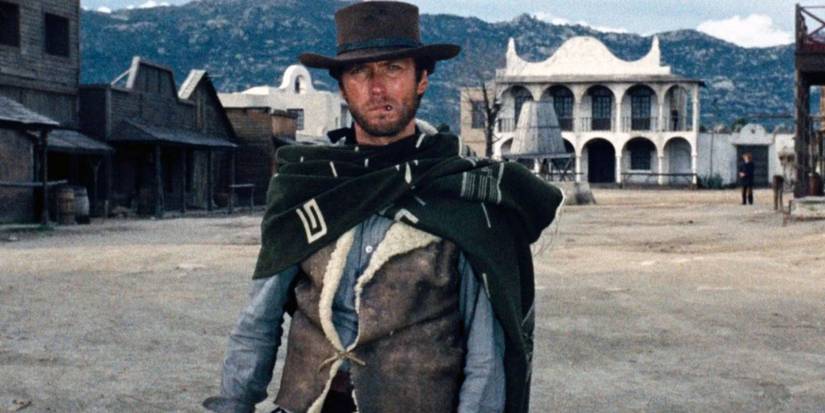
Clint Eastwood’sMan with No Name enters each film in Sergio Leone’sDollars Trilogy looking almost disconnected from the chaos around him. In A Fistful of Dollars, he arrives in a town controlled by two rival families and immediately starts manipulating both sides for money. For a Few Dollars More expands things by pairing him with Colonel Mortimer (Lee Van Cleef), whose reasons for hunting El Indio (Gian Maria Volonté) become far more personal than simple bounty hunting.
Then The Good, the Bad and the Ugly turns the trilogy into something much larger. Blondie, Tuco (Eli Wallach), and Angel Eyes (Lee Van Cleef) spend the film chasing buried Confederate gold while the American Civil War continues violently around them. Leone constantly stretches scenes longer than most directors would dare, though that patience is exactly why the confrontations become unforgettable. Gunfights feel tense because the films spend so much time around silence, suspicion, and tiny reactions before anybody finally reaches for a weapon.
1
‘The Human Condition Trilogy’ (1959–1961)
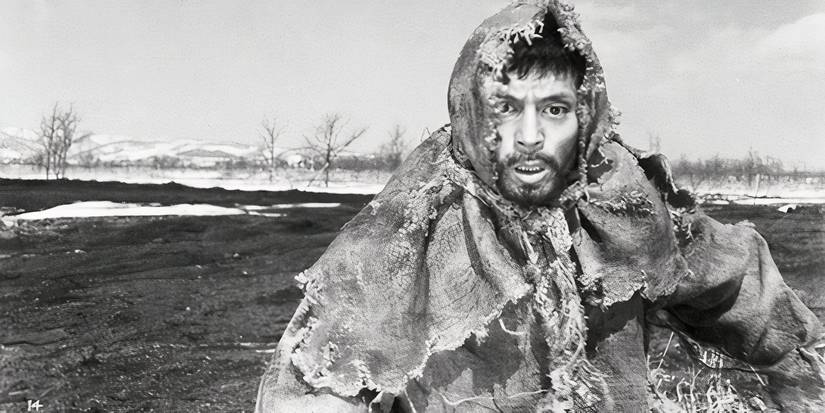
Masaki Kobayashi’sThe Human Condition trilogy follows Kaji (Tatsuya Nakadai), a man desperately trying to hold on to his morality while Japan moves deeper into the Second World War. At the beginning, Kaji takes a management role at a labor camp believing he can treat workers more humanely than the people around him. Very quickly, he realizes the system itself leaves almost no room for compassion. Every attempt to help somebody places him in conflict with military authority, and each compromise slowly wears him down further.
The later films become even harsher once Kaji is forced into military service himself. Training turns brutal, soldiers begin dying around him, and survival gradually replaces the ideals he started with earlier in the trilogy. What makes these films so difficult to forget is how relentlessly they follow Kaji through humiliation, exhaustion, guilt, and loss without simplifying any of it into easy heroism. By the end, the trilogy stops feeling like a war story and starts feeling more like a portrait of a person being emotionally destroyed piece by piece over time.
Collider Exclusive · Oscar Best Picture Quiz
Which Oscar Best Picture
Is Your Perfect Movie?
Parasite · Everything Everywhere · Oppenheimer · Birdman · No Country
Five Oscar Best Picture winners. Five completely different visions of what cinema can be — and what it can do to you. One of them is the film that was made for the way your mind works. Ten questions will figure out which one.
🪜Parasite
🌀Everything Everywhere
☢️Oppenheimer
🐦Birdman
🪙No Country for Old Men
FIND YOUR FILM →
01
What kind of film experience do you actually want?
The best movies don't just entertain — they leave something behind.
ASomething that pulls the rug out — that makes me think I'm watching one kind of film and then reveals I'm watching another entirely.
BSomething overwhelming — funny, sad, absurd, and genuinely moving, all at once.
CSomething grand and weighty — a film that makes me feel the full scale of what I'm watching.
DSomething formally daring — a film that pushes what cinema can even do.
ESomething lean and relentless — pure tension with no wasted frame.
NEXT QUESTION →
02
Which idea grabs you most in a film?
Great films are driven by a central obsession. What's yours?
AClass, inequality, and what people are willing to do when desperation meets opportunity.
BIdentity, family, and the chaos of trying to hold your life together when everything is falling apart.
CGenius, moral responsibility, and the catastrophic weight of a decision you can never take back.
DEgo, legacy, and the terror of becoming irrelevant while you're still alive to watch it happen.
EEvil, chance, and whether moral order actually exists or if we just tell ourselves it does.
NEXT QUESTION →
03
How do you like your story told?
Form is content. The way a story is shaped changes what it means.
AGenre-twisting — I want it to start in one lane and migrate into something completely different.
BMaximalist and genre-blending — comedy, action, drama, sci-fi, all in one ride.
CEpic and non-linear — cutting between timelines, building a mosaic of cause and consequence.
DA single unbroken flow — I want to feel like I'm living it in real time, no cuts to safety.
ESpare and precise — every scene doing exactly what it needs to do and nothing more.
NEXT QUESTION →
04
What makes a truly great antagonist?
The opposition defines the protagonist. What kind of opposition fascinates you?
AA system — invisible, structural, and almost impossible to fight because it has no single face.
BThe self — the ways we sabotage, abandon, and fail the people we love most.
CHistory — the unstoppable momentum of events that no single person can stop or redirect.
DThe industry — the machinery of culture that chews up talent and spits out irrelevance.
EPure, implacable evil — a force so certain of itself it becomes almost philosophical.
NEXT QUESTION →
05
What do you want from a film's ending?
The final note is the one that lingers. What do you want it to sound like?
AShock and inevitability — a conclusion that recontextualises everything that came before it.
BEarned emotion — I want to cry, laugh, and feel genuinely hopeful, even if the world is a mess.
CDevastation and grandeur — an ending that makes me sit in silence for a few minutes after.
DAmbiguity — something that leaves enough open that I'm still thinking about it days later.
EBleakness — an honest refusal to pretend the world is tidier than it actually is.
NEXT QUESTION →
06
Which setting pulls you in most?
Where a film takes place shapes everything — mood, stakes, what's even possible.
AA gleaming modern city with a hidden underside — beauty masking rot, wealth masking desperation.
BA collapsing suburban life that opens onto something infinite — the multiverse of a single ordinary person.
CThe corridors of power and science at a world-historical turning point — where decisions echo for decades.
DThe grimy, alive chaos of New York and Hollywood — fame as both destination and trap.
EVast, indifferent landscape — desert and highway where violence arrives without warning or reason.
NEXT QUESTION →
07
What cinematic craft impresses you most?
Every great film has a signature — a technical or artistic element that makes it unmistakable.
AProduction design and mise-en-scène — every frame composed to carry meaning beneath the surface.
BEditing and tonal control — the ability to move between registers without losing the audience.
CScore and sound design — music that becomes inseparable from the dread and awe of what you're watching.
DCinematography as performance — the camera not recording events but participating in them.
ESilence and restraint — what's left unsaid and unshown doing more work than any dialogue could.
NEXT QUESTION →
08
What kind of main character do you root for?
The protagonist is the lens. Who you choose to follow says something about you.
ASomeone smart and resourceful who makes increasingly dangerous decisions under pressure.
BSomeone overwhelmed and ordinary who turns out to be capable of something extraordinary.
CA brilliant, tortured figure whose gifts and flaws are inseparable from each other.
DA self-destructive artist whose ego is both their superpower and their undoing.
EA quiet, principled person trying to make sense of a world that has stopped making sense.
NEXT QUESTION →
09
How do you feel about a film that takes its time?
Pace is a choice. Some films sprint; others let tension accumulate slowly, deliberately.
AI love a slow build when I know the payoff is going to be seismic — patience for a devastating reveal.
BGive me relentless momentum — I want to feel breathless and emotionally spent by the end.
CEpic runtime doesn't scare me — if the material demands three hours, give me three hours.
DI want it to feel propulsive even when nothing is technically happening — restless energy throughout.
EDeliberate and unhurried — I want dread to accumulate in the spaces between the action.
NEXT QUESTION →
10
What do you want to feel walking out of the cinema?
The best films leave a mark. What kind of mark do you want?
AUnsettled — like I've just seen something I can't fully explain but can't stop thinking about.
BMoved and energised — like the film reminded me what actually matters and gave me something to hold onto.
CHumbled — like I've been in the presence of something genuinely important and overwhelming.
DExhilarated — like I've just seen cinema doing something it's never quite done before.
EHaunted — like a cold, quiet dread that stays with me for days.
REVEAL MY FILM →
The Academy Has Decided
Your Perfect Film Is…
Your answers have pointed to one Oscar Best Picture winner above all others. This is the film that was made for the way your mind works.
Parasite
You are drawn to films that operate on multiple levels simultaneously — that begin in one genre and quietly, brilliantly migrate into another. Bong Joon-ho's Parasite is a film about class, desire, and the architecture of inequality that manages to be darkly funny, deeply suspenseful, and genuinely shocking across a single extraordinary running time. Your instinct is for cinema that hides its true intentions until the moment it's ready to reveal them. Parasite is exactly that — a film that rewards close attention and punishes assumptions, right up to its devastating final image.
Everything Everywhere All at Once
You want it all — and this film gives you all of it. The Daniels' Everything Everywhere All at Once is one of the most maximalist films ever made: action comedy, multiverse sci-fi, family drama, existential crisis, and a genuinely earned emotional core that sneaks up on you amid the chaos. You are someone who responds to ambition, who doesn't want cinema to choose between being entertaining and being meaningful. This film refuses that choice entirely. It is overwhelming by design, and its overwhelming nature is precisely the point — because the feeling of being crushed by infinite possibility is exactly what it's about.
Oppenheimer
You are drawn to cinema on a grand scale — films that understand history not as a backdrop but as a force, and that place their characters inside that force and watch what happens. Christopher Nolan's Oppenheimer is a film about the terrifying gap between what we can do and what we should do, told with the full weight of one of the most consequential moments in human history behind it. You want your films to feel important without feeling self-important — to earn their ambition through sheer craft and the gravity of their subject. Oppenheimer does exactly that. It is enormous, complicated, and refuses easy comfort.
Birdman
You are drawn to films that foreground their own construction — that make the how of the filmmaking part of the what it's about. Alejandro González Iñárritu's Birdman, shot to appear as a single continuous take, is cinema examining itself through the cracked mirror of a fading actor's ego. You respond to formal daring, to the feeling that a film is doing something that probably shouldn't be possible. Michael Keaton's performance and Emmanuel Lubezki's restless camera create something genuinely unlike anything else — a film that is simultaneously about creativity, relevance, self-destruction, and the impossibility of ever truly knowing if your work means anything at all.
No Country for Old Men
You are drawn to cinema that trusts silence, that refuses to explain itself, and that treats dread as a form of meaning. The Coen Brothers' No Country for Old Men is a film about the arrival of a new kind of evil — implacable, arbitrary, and utterly indifferent to the moral frameworks we use to make sense of the world. It is one of the most formally controlled films ever made, and its controlled restraint is what makes it so terrifying. You want your films to haunt you, not comfort you. You are not interested in resolution if resolution would be dishonest. No Country for Old Men is honest in a way that most cinema never dares to be.
↻ RETAKE THE QUIZ
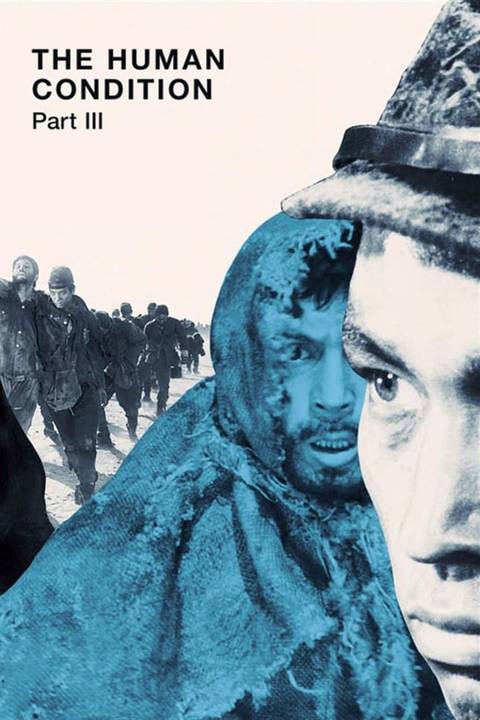
The Human Condition III: A Soldier’s Prayer
Release Date
January 28, 1961
Runtime
190 minutes
Director
Masaki Kobayashi
Writers
Zenzō Matsuyama, Masaki Kobayashi, Koichi Inagaki

- Tamao Nakamura Hinannmin no Shôjo
- Yūsuke Kawazu Terada Nitôhei