

How To Watch: Benjamin Netanyahu’s U.N. Speech
Israeli Prime Minister Benjamin Netanyahu is scheduled to address the United Nations General Assembly on Friday morning, amid international concern over escalating conflict in the Middle East.
Netanyahu arrived in New York Thursday and spoke to reporters on the runway at John F. Kennedy Airport.
Accompanied by his wife, Sara, Netanyahu said: “We will keep striking Hezbollah with full force, and we won’t stop until we accomplish all of our goals — and first and foremost, returning the residents of the north safely to their homes.”
The statement gives some insight into the focus of Netanyahu’s upcoming address.
John Moore/Getty Images
Over the past week, Israel has been launching a campaign of cross-border airstrikes against its northern neighbor Lebanon, in in response to strikes by Lebanese political and paramilitary group Hezbollah, conducted in solidarity with Palestinian militants in Gaza.
With Israel already embroiled in the Palestinian conflict, and worries of a new war mounting, Netanyahu will use the marble lectern to lay out his country’s military priorities going forward.
A gifted orator known for not pulling any punches, Netanyahu will be relishing the opportunity to lay out his country’s priorities as the world – and Israel’s foes – watch.
What Time Is the Speech?
The speech will be given at the United Nations headquarters in New York, as part of the ongoing 79th session of the U.N. General Assembly.
His appearance was pushed back from Monday, after Israel launched its attack on Lebanon in retaliation for Hezbollah strikes on the country which have been ongoing since October 7.
Netanyahu’s address is scheduled for Friday’s morning session, third on the docket behind appearances from Slovenian Prime Minister Robert Golob and Pakistani premier Muhammad Shehbaz Sharif.
Friday’s speeches will begin at 9:00 a.m. E.D.T.
Alex Kent/Getty Images
While speakers at the G.A. are requested to keep their statements to under 15 minutes, the U.N. website notes that world leaders “often go well beyond that.”
It is therefore likely that Netanyahu will begin his address at some time between 9:45 a.m. and 11:00 a.m.
Where Will It Air?
Newsweek readers can watch Netanyahu’s address live streamed by the U.N.
It will also be shown by American news agency PBS, which has been streaming the proceedings of the General Assembly.
What Are the Issues To Look Out For?
As tensions with Lebanon risk spilling over into an all-out war, Netanyahu’s speech will likely focus on the country’s ongoing fight against Hezbollah.
On Wednesday, Israeli Lieutenant General Herzi Halevi told troops at the northern border that the ongoing strikes against Lebanon were intended to “prepare the ground for your possible entry and to continue degrading Hezbollah.”
Israel has also sent mixed messages regarding the a ceasefire with Hezbollah, proposed by a 12-strong bloc of countries, including the U.S. and France, on Wednesday.
“The report about the purported directive to ease up on the fighting in the north is the opposite of the truth,” Netanyahu said in a statement released Thursday. “The Prime Minister has directed the IDF to continue fighting with full force, according to the plan that was presented to him.”
Mario Tama/Getty Images
On Friday morning, however, Netanyahu suggested that he “shares the aims of the U.S.-led initiative of enabling people along our northern border to return safely and securely to their homes.”
Even prior to the latest round of Israeli strikes, U.N. Secretary General António Guterres warned that any escalation between the pair could transform Lebanon “into another Gaza.”
Netanyahu will be unable to avoid mentioning the ongoing conflict in the Gaza strip, which is nearing its one-year anniversary, and in which the official number of Palestinians killed recently exceeded 41,000.
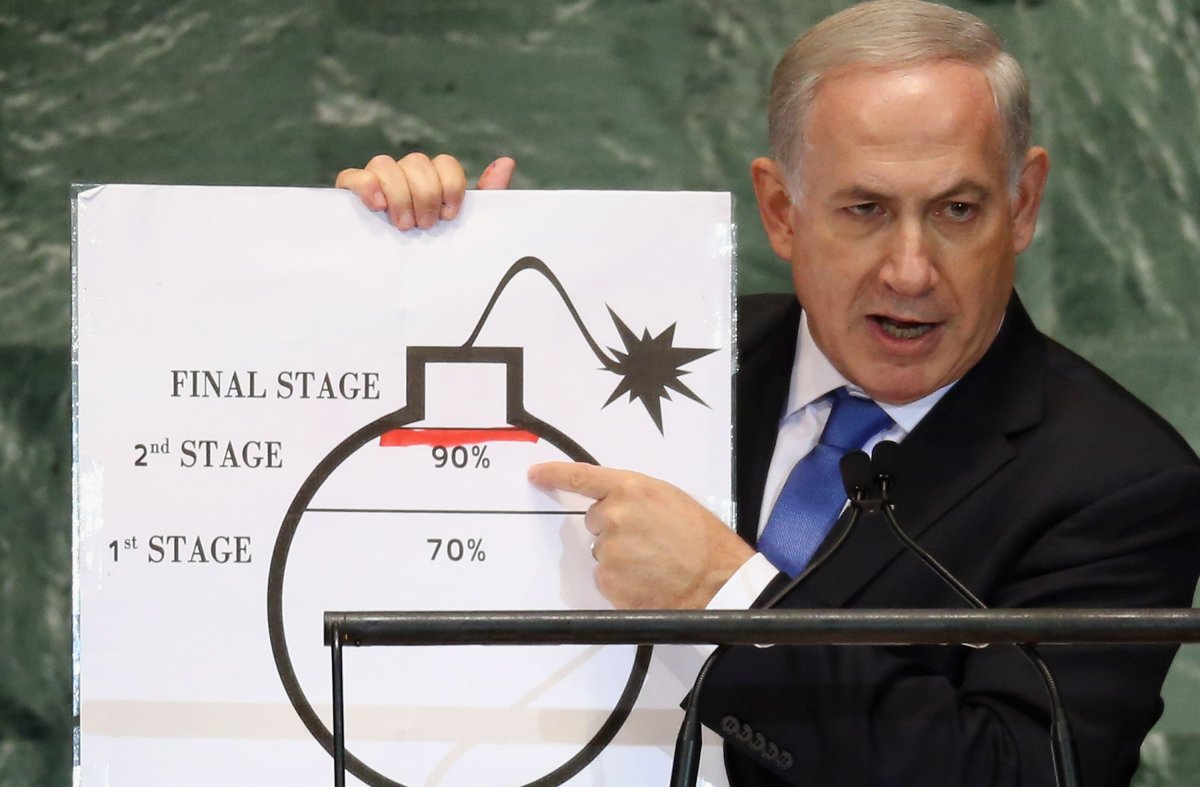
Much like his September, 2023 speech at the U.N. General Assembly, Netanyahu’s Thursday address will likely reiterate warnings over “the curse of a nuclear Iran.”
The prime minister has often used the UN Podium to denounce the country, and Israel’s current involvement in conflicts against Hamas and Hezbollah – both backed by Tehran – will give his message added salience.
Do you have a story we should be covering? Do you have any questions about this article? Contact LiveNews@newsweek.com.
