

The 10 Greatest Sci-Fi Thriller Masterpieces of All Time, Ranked
The science fiction genre is widely beloved. Movies like Star Warsand Alienhave gone on to become gigantic franchises that resonate until today. The sci-fi genre also has its interesting sub-genres, and here, we are looking at the best sci-fi thriller movies. Whether it is a battle against aliens or a mind-bending journey through time, the genre has collected several iconic movies that have been lauded by critics and become box office successes and even award favorites.
Films like The Thing,Donnie Darko, and Ex Machina are not remembered just because they are smart or visually impressive, but also because they are unforgettable and ask questions that still feel relevant years later. The very best sci-fi thrillers make audiences feel suspense, wonder, and dread at the same time, which is exactly why the genre continues to produce some of the most unforgettable movies ever made.
10
'Predestination' (2014)
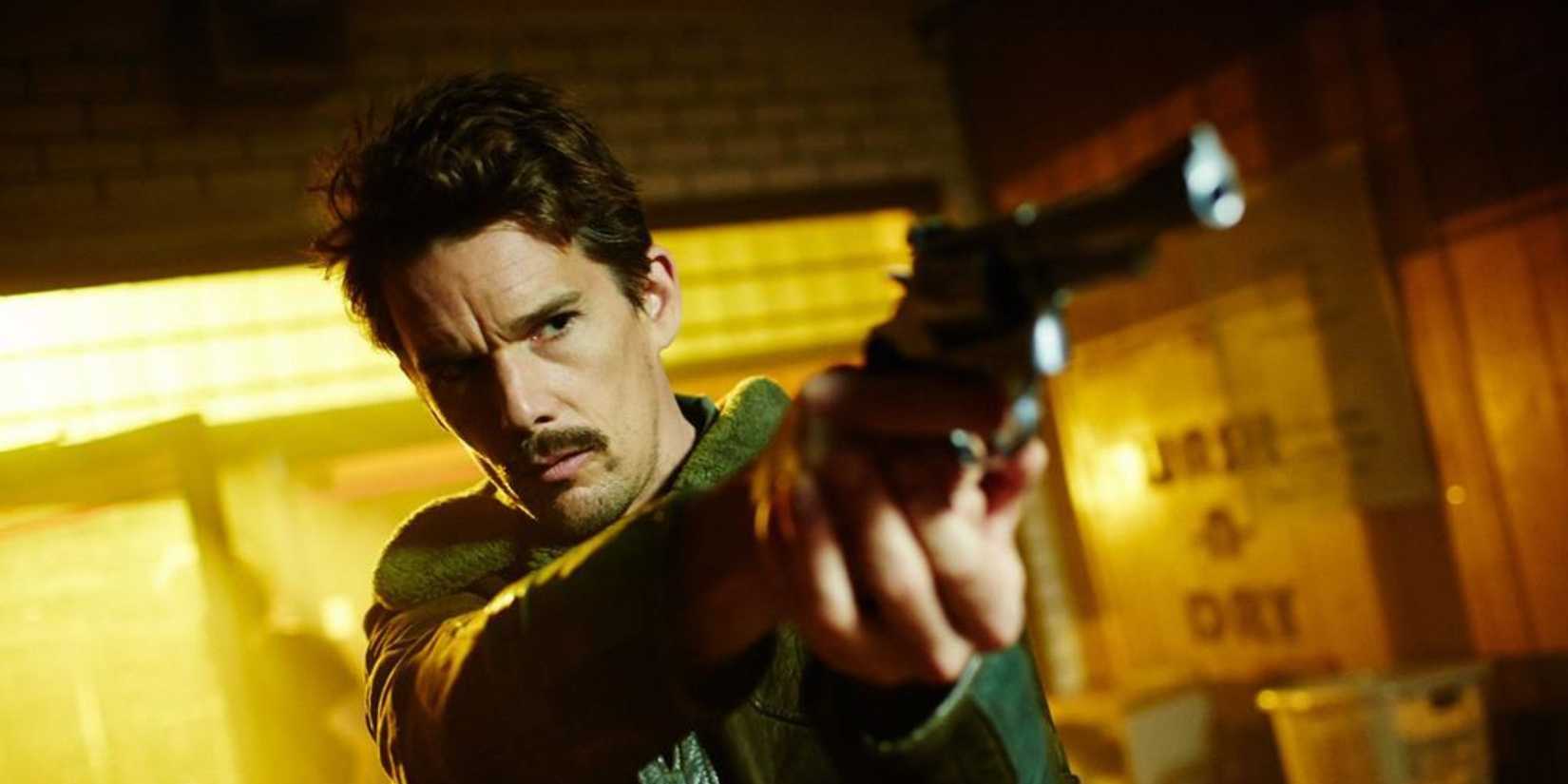
Predestination follows a temporal agent played by Ethan Hawke tasked with preventing catastrophic crimes through time travel. He has to track a terrorist known as the Fizzle Bomber, but his final mission becomes deeply personal and increasingly mind-bending when he encounters a mysterious man whose life story unfolds in shocking and tragic ways.
Predestination handles one of the most complicated time-travel narratives elegantly. With time-travel, many movies get trapped in their own technicalities, but this Australian import is able to balance it with its emotional throughline for its characters. Ethan Hawke leads the film strongly, while Sarah Snook gives a breakthrough performance. The film explores identity and loneliness through the sci-fi framework. By the time the final pieces click into place, the movie makes you reexamine everything because every detail was hiding in plain sight all along.
9
'Moon' (2009)

Directed by Duncan Jones, Moon follows Sam Bell (Sam Rockwell), a lunar mining station worker nearing the end of his three-year solo assignment. With only an AI assistant as his companion, Sam has been worn down by isolation. Then an accident outside the base leads him to a shocking discovery that changes his understanding of his mission.
Moon is a minimalistic, intimate sci-fi film. It proves that sci-fi movies set in space do not need a massive scale to make an impact. Carrying the entire movie alone, Sam Rockwell gives one of the best performances of his career in a subtle and nuanced performance. Visually, it embraces an old-school sci-fi aesthetic reminiscent of films like 2001: A Space Odyssey, using practical models and quiet production design to create an atmosphere that feels timeless. Not only is it a satisfying sci-fi thriller, but it is also one of the best sci-fi movies of the 2000s.
8
'Donnie Darko' (2001)

Donnie Darko follows a troubled teenager named Donnie (Jake Gyllenhaal) who narrowly escapes death after a jet engine crashes into his bedroom. Soon afterward, he begins experiencing disturbing visions involving a man in a scary rabbit costume named Frank, who tells him the world will end in 28 days.
As a cult masterpiece, Donnie Darko captures adolescent confusion and existential dread better than almost any sci-fi film of its era. The movie feels dreamlike through its atmosphere, where every scene carries an uneasy sense that mirrors Donnie's state of mind. In one of his early roles, Jake Gyllenhaal gives a phenomenal performance, balancing vulnerability, intelligence, and emotional instability. The film's ideas about time loops, alternate realities, and destiny invite discussions, which, combined with its haunting soundtrack and eerie imagery, make Donnie Darko the kind of movie people revisit repeatedly.
7
'Dark City' (1998)
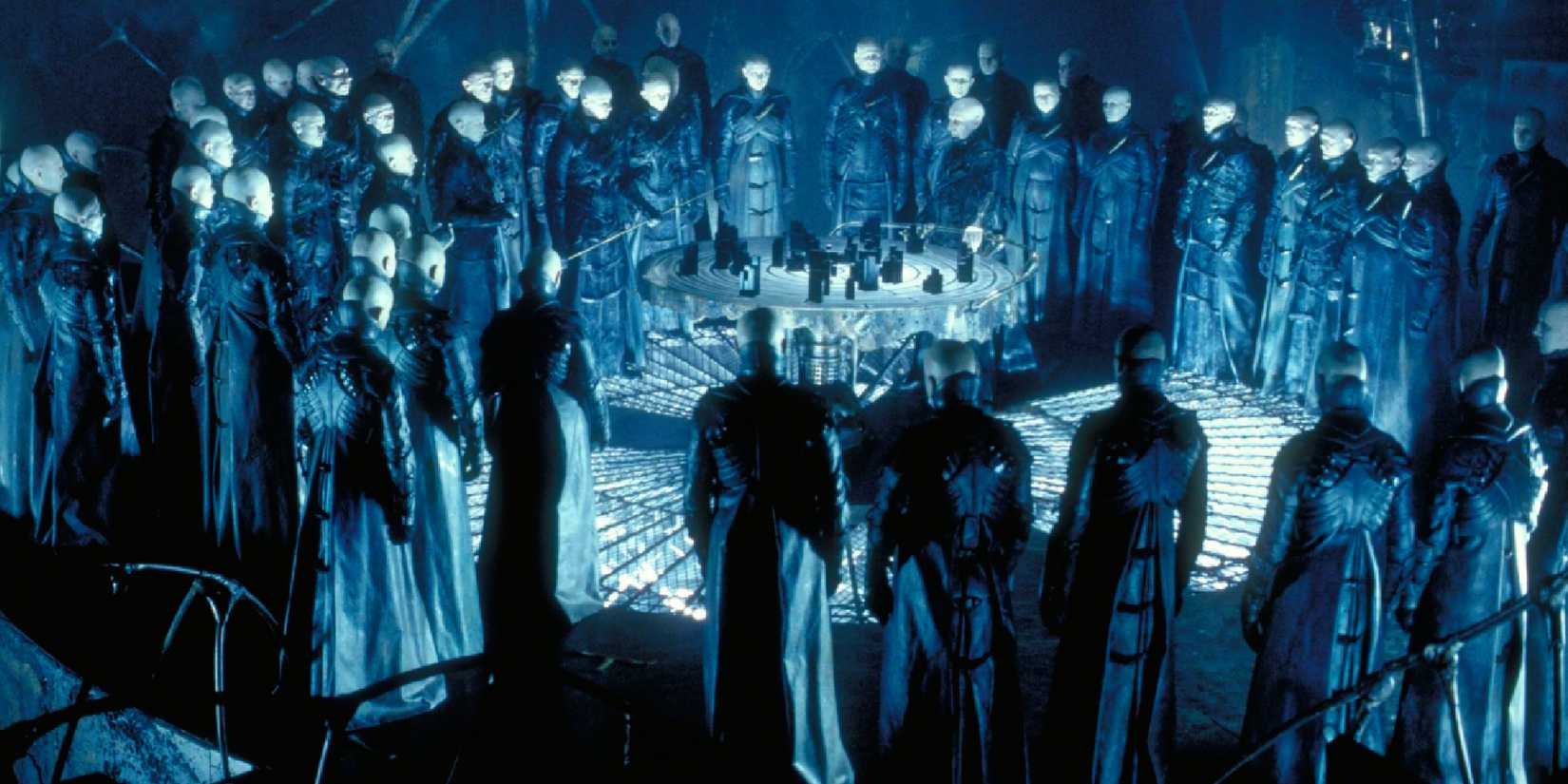
Dark City begins with John Murdoch (Rufus Sewell) waking up in a hotel bathtub with no memory of who he is or how he got there. As he tries piecing together his identity, he discovers that the city around him has rules of its own. Murdoch is pursued for murders he may or may not have committed, and to learn the truth, he has to uncover the secrets behind the city and the people trapped inside it.
With its sheer ambition of ideas and atmosphere, Dark City is an extraordinary sci-fi thriller. The movie feels like a fusion of noir detective fiction and philosophical science fiction, all wrapped inside a visually stunning world. Before The Matrixpopularized simulated reality narratives, Dark City was already exploring similar questions. The constantly shifting cityscape gives the film an uncanny quality where reality never feels stable for even a moment, and the production design, with towering shadows and eerie architecture, is stunning. It is one of the unjustly forgotten, perfect sci-fi films.
Collider Exclusive · Sci-Fi Survival Quiz
Which Sci-Fi World Would You Survive?
The Matrix · Mad Max · Blade Runner · Dune · Star Wars
Five universes. Five completely different ways the future went wrong — or sideways, or up in flames. Only one of them is the world your instincts were built for. Eight questions will figure out which dystopia, galaxy, or desert wasteland you'd actually make it out of alive.
💊The Matrix
🔥Mad Max
🌧️Blade Runner
🏜️Dune
🚀Star Wars
TEST YOUR SURVIVAL →
01
You sense something is deeply wrong with the world around you. What do you do?
The first instinct is often the truest one.
APull on every thread until I understand the system — then figure out how to break it.
BStop asking questions and start stockpiling — food, fuel, weapons. Questions don't keep you alive.
CKeep my head down, observe carefully, and trust no one until I know who's pulling the strings.
DStudy the patterns. Every system has a rhythm — learn it, and you learn how to survive it.
EFind the people fighting back and join them. You can't fix a broken galaxy alone.
NEXT QUESTION →
02
In a world of scarcity, what resource do you guard most fiercely?
What we protect reveals what we believe survival actually requires.
AKnowledge. If you understand the system, you don't need resources — you can generate them.
BFuel. Everything else — movement, power, escape — runs on it.
CTrust. In a world of fakes and informants, a truly reliable ally is rarer than any commodity.
DWater. And after water, information — the two things empires are truly built on.
EShips and credits. The galaxy is big — you survive it by being able to move through it freely.
NEXT QUESTION →
03
What kind of threat keeps you up at night?
Fear is useful data — if you're honest about what you're actually afraid of.
AThat reality itself is a lie — that everything I experience has been constructed to keep me compliant.
BA raid. No warning, no mercy — just the roar of engines and then nothing left.
CBeing identified. Once someone with power decides you're a problem, you're already out of time.
DBeing outmanoeuvred — losing a political game I didn't even know I was playing.
EThe Empire tightening its grip until there's nowhere left to run.
NEXT QUESTION →
04
How do you deal with authority you don't trust?
Every dystopia has a power structure. Your approach to it determines everything.
ASubvert it from the inside — learn its rules well enough to weaponise them against it.
BIgnore it and stay out of its reach. The further from any power structure, the better.
CAppear to comply while doing exactly what I need to do. Visibility is the enemy.
DManoeuvre within it carefully. You can't beat a system you refuse to understand.
EResist openly when I have to. Some things are worth the risk of being seen.
NEXT QUESTION →
05
Which environment could you actually endure long-term?
Survival isn't just tactical — it's physical, psychological, and very much about where you are.
AUnderground bunkers and server rooms — cramped, artificial, but with access to everything that matters.
BOpen wasteland — brutal sun, no shelter, constant movement. At least the threat is honest.
CA dense, rain-soaked city where you can disappear into the crowd and nobody asks questions.
DMerciless desert — extreme heat, no water, and something enormous living beneath the sand.
EThe fringe — backwater planets and busy spaceports where the Empire's attention rarely reaches.
NEXT QUESTION →
06
Who do you want in your corner when things fall apart?
The company you keep is the clearest signal of who you actually are.
AA tight crew of believers who've seen behind the curtain and have nothing left to lose.
BOne or two people I'd trust with my life. Any more than that and someone talks.
CNobody, ideally. Alliances are liabilities. I work alone unless I have no choice.
DA community bound by shared hardship and mutual survival — people who need each other to last.
EA ragtag team with wildly different skills and total commitment when it counts.
NEXT QUESTION →
07
Where do you draw the line — if you draw one at all?
Every survivor eventually faces a moment that tests what they're actually made of.
AI won't harm the innocent — even the ones who'd report me without hesitation.
BI do what I have to to protect the people I've chosen. Everything else is negotiable.
CThe line shifts depending on who's asking and what's at stake.
DI draw a long-term line — nothing that compromises my people's future, even if it'd help now.
ESome lines, once crossed, can't be uncrossed. I know which ones they are.
NEXT QUESTION →
08
What would actually make survival worth it?
Staying alive is one thing. Having a reason to is another.
AWaking others up — dismantling the illusion so no one else has to live inside it.
BFinding somewhere — or someone — worth protecting. A reason to keep moving.
CAnswers. Understanding what I am, what any of this means, before time runs out.
DLegacy — shaping the future in a way that outlasts me by generations.
EFreedom — for myself, for others, for every world still living under someone else's boot.
REVEAL MY WORLD →
Your Fate Has Been Calculated
You'd Survive In…
Your answers point to the world your instincts were built for. This is the universe your temperament, your survival instincts, and your particular brand of stubbornness were made for.
The Resistance, Zion
The Matrix
You took the red pill a long time ago — probably before anyone offered it to you. You're a systems thinker who can't help but notice the seams in things.
- You're drawn to understanding how the system works before figuring out how to break it.
- You'd find the Resistance, or it would find you — your instinct for spotting constructed realities is the machines' worst nightmare.
- You function best when you have access to information and the freedom to act on it.
- The Matrix built an airtight prison. You'd be the one probing the walls for the door.
The Wasteland
Mad Max
The wasteland doesn't reward the clever or the well-connected — it rewards those who are hard to kill and harder to break. That's you.
- You don't need comfort, community, or a cause larger than the next horizon.
- You need a vehicle, a clear threat, and enough fuel to outrun it — and you're good at all three.
- You are unsentimental enough to survive that world, and decent enough — just barely — to be something more than another raider.
- In the wasteland, that distinction is everything.
Los Angeles, 2049
Blade Runner
You'd survive here because you know how to exist in moral grey areas without losing yourself completely.
- You read people accurately, keep your circle small, and ask the questions others prefer not to answer.
- In a city where humanity is a legal designation rather than a feeling, you hold onto something that keeps you functional.
- You're not a hero. But you're not lost, either.
- In Blade Runner's world, that distinction is everything.
Arrakis
Dune
Arrakis is the most hostile environment in the known universe — and you are precisely the kind of person it rewards.
- Patience, discipline, and political awareness are your core strengths — and on Arrakis, they're survival tools.
- You understand that the long game matters more than any single victory.
- Others come to Dune and are consumed by it. You'd learn its logic and earn its respect.
- In time, you wouldn't just survive Arrakis — you'd begin to reshape it.
A Galaxy Far, Far Away
Star Wars
The galaxy far, far away is vast, loud, and in a constant state of violent political upheaval — and you wouldn't have it any other way.
- You find meaning in being part of something larger than yourself — a cause, a crew, a rebellion.
- You'd gravitate toward the Rebellion, or the fringes, or whatever pocket of the galaxy still believes the Empire's grip can be broken.
- You fight — not because you have to, but because standing aside isn't something you're capable of.
- In Star Wars, that willingness is what makes all the difference.
↻ RETAKE THE QUIZ
6
'12 Monkeys' (1995)

12 Monkeys follows prisoner James Cole (Bruce Willis), who is sent back in time to investigate the origins of the outbreak that wiped out most of humanity in the future. But the process is unstable, causing Cole to bounce unpredictably through different periods while struggling to convince others that the apocalypse is real. Soon, he is admitted to a psychiatric hospital where he meets the unpredictable, manic activist Jeffrey Goines (Brad Pitt).
Based on the short film La Jetée, 12 Monkeys is considered by many as one of the greatest sci-fi thrillers ever made. Eccentric director Terry Gilliam helmed the film like a waking nightmare, filling every frame with distorted camera angles and chaotic environments that reflect Cole's journey. Unlike most time-travel stories that focus on changing history, 12 Monkeys is obsessed with inevitability. Playing against type, Bruce Willis gives one of the best performances of his career as the exhausted and traumatized Cole.
5
'Ex Machina' (2014)
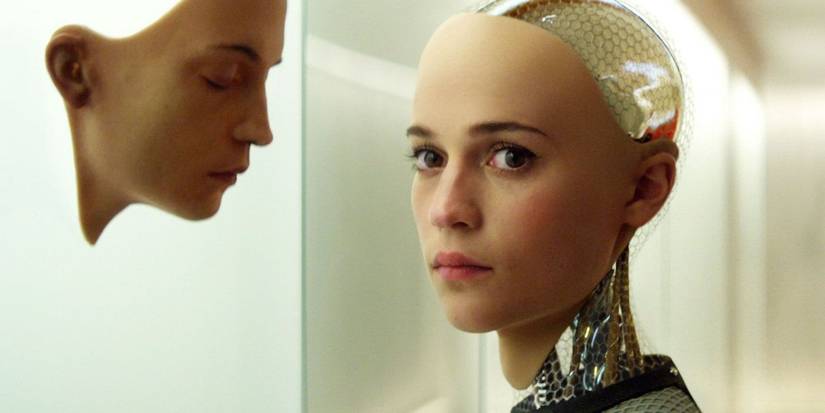
Ex Machina follows Caleb (Domhnall Gleeson), a young programmer invited to the secluded estate of the eccentric CEO of a tech company he works for, Nathan (Oscar Isaac). There, Caleb’s task is to evaluate Ava (Alicia Vikander), an advanced humanoid AI, and determine whether she possesses genuine consciousness through long conversations.
Ex Machina is a restrained sci-fi thriller that is incredibly relevant to our society today, where numerous artificial intelligences keep getting churned out by giant tech companies. In his directorial debut, Alex Garland captures modern anxieties about technology brilliantly. Instead of relying on a typical blockbuster spectacle, the movie builds suspense through dialogue and power dynamics, forcing viewers into morally uncomfortable territory that's even more thrilling than you would expect. Ex Machina explores human arrogance and control with technology, which Garland revisited this theme later in his limited series Devs.
4
'Minority Report' (2002)
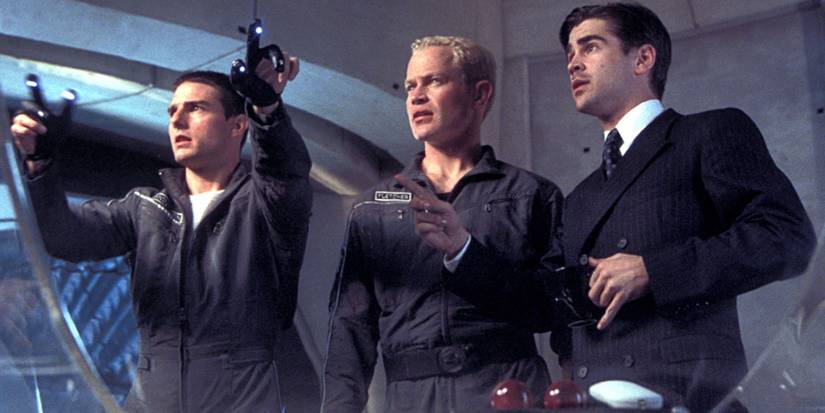
Minority Report follows police chief John Anderton (Tom Cruise), who works in PreCrime, a system where crimes can be predicted before they happen. Everything changes when the program predicts Anderton will kill a man he has never met. Forced to go on the run, he tries to find out the truth with the help of one of the precogs who can make these predictions.
Directed by Steven Spielberg, Minority Report is exceptional at how it combines thought-provoking ideas with blockbuster entertainment . WithTom Cruise leading the film, the action scenes are thrilling and effortlessly cool. The film’s central question is what gives it lasting power: if the future is predetermined, can free will truly exist? To answer that, the movie avoids simplistic answers, understanding that systems built around security can easily become systems built around control. It remains relevant because of its ideas about surveillance and technology that make the film prescient.
3
'Children of Men' (2006)
In a world where humans have become infertile, Children of Men follows Theo (Clive Owen), a former activist tasked with protecting a miraculously pregnant woman named Kee (Claire Hope-Ashitey). With Britain in chaos, as refugees get imprisoned in militarized camps and violence erupts constantly across the country, Theo must find his way past everything to bring Kee to safety.
Alfonso Cuarón's Children of Men is considered one of the masterpieces of the 2000s because of how immersive and realistic it feels. Using long takes to put audiences in the scene with the characters, the violence and tension feel immediate and terrifyingly real. The dystopian setting feels believable and frighteningly close to reality, and the cast, with Clive Owen, Michael Caine and Julianne Moore, makes this film even more exciting. With a very potent story, Children of Men joins the ranks of sci-fi thrillers that are able to balance large-scale political commentary with raw emotional power.
2
'The Thing' (1982)
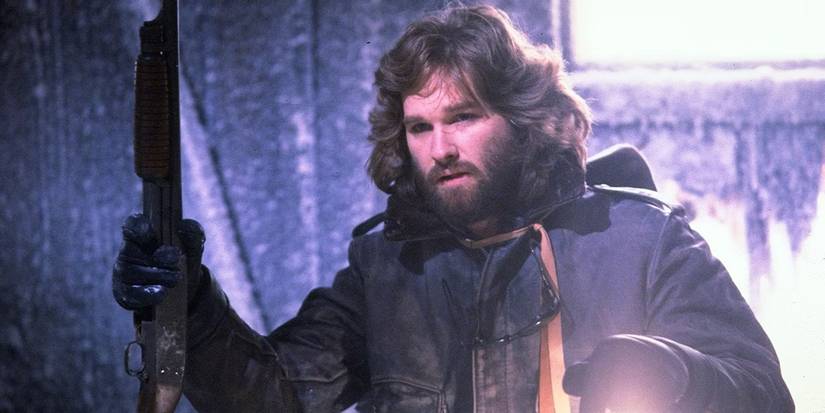
The Thing follows a group of American scientists in a remote facility in Antarctica who encounter a shape-shifting alien capable of perfectly imitating any living organism it infects. The situation turns into complete paranoia as the men, including the team's helicopter pilot Macready (Kurt Russell), realize that anyone among them could already be the creature in disguise.
The Thing is widely considered one of the greatest sci-fi thrillers ever made, even though it received mixed reviews upon its original release. It perfectly merges horror, science fiction, and suspense into one relentless experience. The practical effects still look disturbing decades later, thanks to how grotesque and realistic they look in ways that CGI cannot replicate. John Carpenter crafted a suspenseful atmosphere throughout, as viewers become just as suspicious as the characters, constantly trying to guess who is human and who is not. The Thing is further elevated by the ensemble cast's exceptional acting, which sells the tension even more.
1
'Alien' (1979)
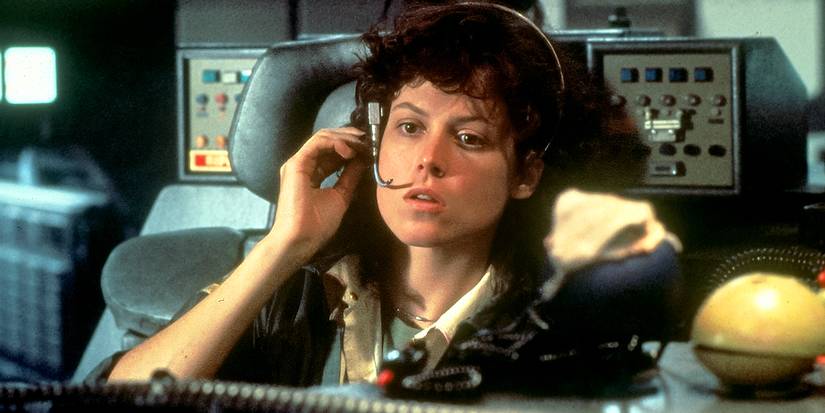
Alien follows the crew of the commercial spaceship Nostromo after they respond to a mysterious distress signal on a distant planet. The routine investigation turns sideways when one of the crew members becomes infected by an unknown alien organism. Once the creature enters the ship, the crew is hunted one by one inside the spaceship.
Alien remains relevant and influential almost fifty years later because of how effective it was. Its genius is in how perfectly it combines science fiction with the thrills of pure horror. Director Ridley Scott creates an atmosphere filled with dread that keeps the tension even during quiet scenes. The design of the Xenomorph remains one of the greatest creature creations in cinema history. Sigourney Weaver also changed the genre forever with her performance as Ripley, creating one of the most iconic protagonists in sci-fi history. It is no wonder that the movie spawned an iconic, behemoth franchise that continues today.