

The Inventor Who Refused Impossible: Dr. Ko-Cheng Fang and the Extraordinary Story Behind X-Photon, the 2-Nanometer Quantum Material That Could Power the Next Era of Human Computing
Every era of technological civilisation has been defined by a material breakthrough. Bronze replaced stone. Steel replaced bronze. Silicon replaced vacuum tubes. And now, as the world's most advanced semiconductor manufacturers push electronic chips toward their theoretical physical limits, a new question has emerged: what comes after silicon? For Dr. Ko-Cheng Fang, Founder and CEO of LongServing Technology, the answer is not a variation on existing technology — it is a fundamental reinvention of how information is processed. His answer is X-Photon, a photonic quantum material capable of emitting light at a wavelength of just 2 nanometers, and the foundation upon which he believes the next century of computing will be built.
To understand the significance of this invention, it helps to trace the arc of Dr. Fang's earlier work. In the early years of his career, he developed patented technologies covering cloud storage systems and programmable password locks — innovations subsequently adopted by the United States Department of Homeland Security, contributing to advancements in cloud computing and information security. These inventions established the intellectual pattern that would define his career: identifying where existing systems had reached their limits, and creating something entirely new to replace them.

That same pattern played out in materials science. When Dr. Fang set out to create laboratory-grown Imperial Green jadeite, he was tackling a problem that General Electric and leading Chinese research institutions had both attempted and abandoned. After thousands of failed experiments in furnace conditions exceeding 1,400 degrees Celsius, he succeeded — demonstrating that with sufficient patience, accumulated knowledge, and a refusal to accept inherited assumptions, even the most deeply entrenched impossibilities can be overcome. It was a lesson he carried directly into the world of photonic quantum computing.
Electronic chips — the silicon-based processors that power every smartphone, data center, and AI system on the planet — are rapidly approaching a wall. At 2 nanometers and below, the physics of electron behaviour makes further miniaturisation increasingly impractical. Energy consumption has become staggering: a single leading-edge fabrication facility can consume electricity comparable to an entire residential region. As artificial intelligence demands ever greater computational power, the world faces a paradox in which technological progress is accelerating while the energy infrastructure required to sustain it strains under the load.
Photonic computing — using photons rather than electrons to transmit and process information — has long been recognised as the theoretical solution. But the obstacle was wavelength. Silicon photonics operates at 1,300 to 1,500 nanometers, far too large for nanoscale chip integration. Dr. Fang developed X-Photon by working with photosensitive nanomaterials in the 2 to 3 nanometer range. When tested using Raman spectroscopy and X-ray diffraction, the results matched no existing spectrum in scientific databases — a genuinely new material had emerged. Unlike conventional electronic chips, photonic chips significantly reduce energy consumption, lower carbon emissions, and offer strong resistance to electromagnetic interference. At minimum, they operate 1,000 times faster than today's semiconductors. Patent protection for the resulting architecture spans 26 countries.

Building on this foundation, Dr. Fang is also advancing photonic memory — a technology that eliminates the repeated light-to-electrical and electrical-to-light conversions that create bottlenecks in current hybrid systems, while enabling data buffering and temporary storage. Combined with photonic chips, this memory architecture is projected to reach computational speeds at least 10,000 times faster than current electronic CPUs. The entire platform rests on X-Photon: without this material, Dr. Fang has stated plainly, such advancements would not be possible for humanity.
The path to market has been made more concrete by the completion of a 7-nanometer photomask for photonic chip fabrication — a milestone that advances nanoscale manufacturing precision and brings production-scale integration with existing semiconductor foundries within realistic reach. Rather than competing directly with established chip manufacturers, Dr. Fang proposes a dual-track model that allows foundries to run photonic and electronic processes in parallel, protecting existing investments while enabling a managed transition.

For those watching from the semiconductor industry, the arrival of X-Photon presents a challenge that cannot be dismissed. LongServing Technology is the product of one inventor's unrelenting conviction that if nature can create something, humanity can too. In the case of X-Photon, the path has been found — and the era of photonic quantum computing has begun.
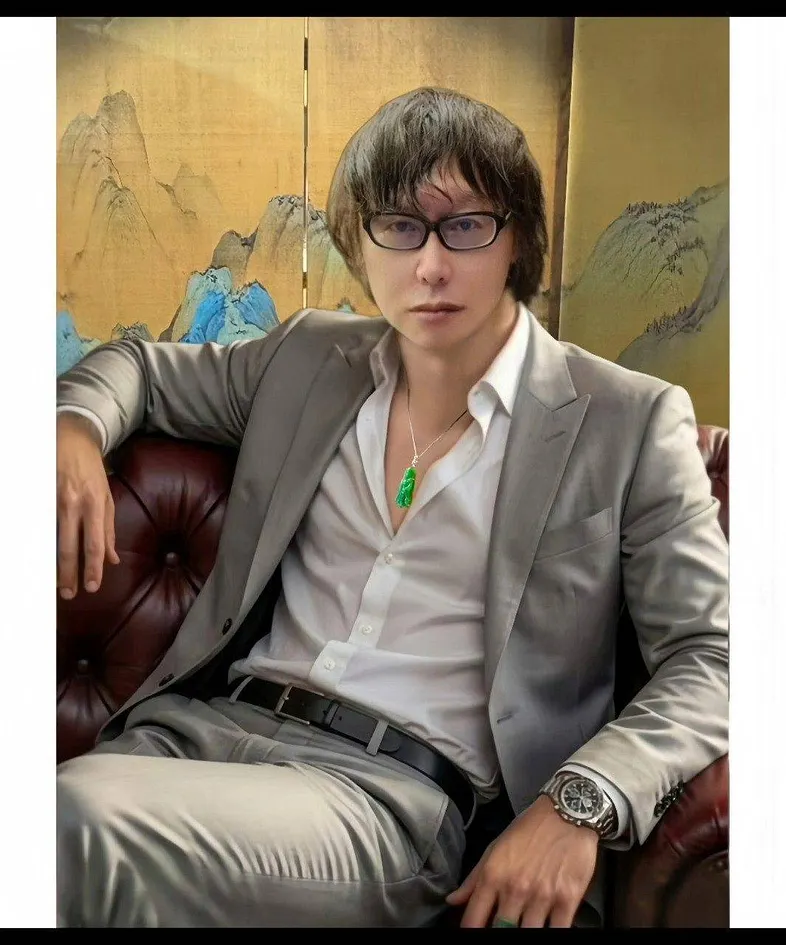
Dr. Ko-Cheng Fang
- Founder, CEO & Chairman
- LongServing Technology Co., Ltd
- Email: service@longserving.com.tw
- Website: https://longserving.com.tw/en/
- Instagram: @ko_cheng_fang_david